Ask anyone who builds consumer products what they are aiming for and you will hear the word magic, meaning the moment the thing clicks and somebody quits evaluating your product and starts using it.
Magic as a goal describes a feeling without specifying which feeling. There are two, and building for one while measuring the other is how teams end up with products people admire and never open.
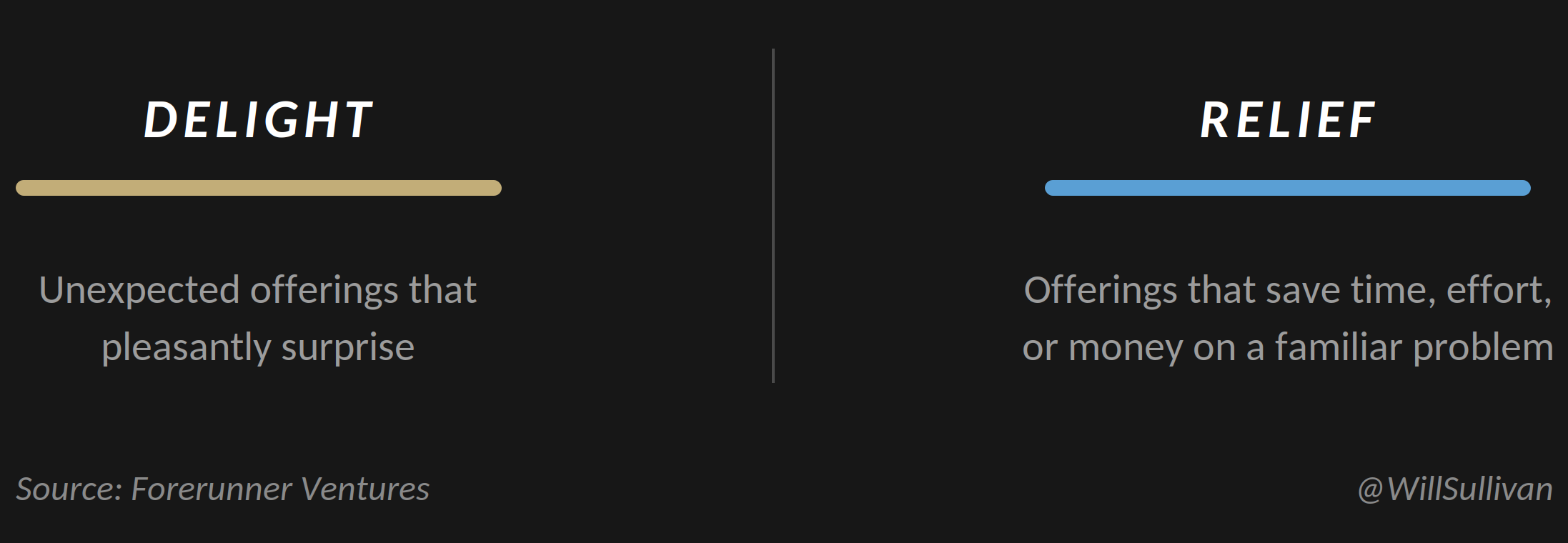
Kirsten Green and the team at Forerunner Ventures introduced the split a few years ago, dividing magic into delight and relief.
Delight is the unexpected. A product does something you did not know was possible, and the feeling is closer to surprise than satisfaction. Relief is the opposite emotion. A familiar problem, one you already know you hate, costs you less time and money than it used to. Relief earns gratitude instead of surprise.
Once you separate them, most product decisions stop being matters of taste. You win or lose a delight product on the first run. The reveal is the entire value proposition, so onboarding is the product. You want the user to hit the impossible thing in the first thirty seconds, before they have decided what category to file you under.
Delight also falls off. Surprise depreciates, because the second time is not a surprise. Products built on delight tend to post great acquisition numbers and then hit a retention cliff, because nobody can experience the reveal twice.
A relief product is the opposite. The first run barely matters because the user already understands what you do. They came in knowing the problem. Their open question is whether you will hold up, so they judge you on the fifth use rather than the first. Consistency is the feature. A relief product that works well 80% of the time is worse than one that works every time, because the promise is that the user gets to stop worrying about this.
The tradeoff is that relief leaves almost nothing to point at. Nobody texts a friend about a thing that saved them nineteen minutes. Relief products are harder to market and slower to spread because they don't produce a story.
The consumer products that defined the 2010s are almost all delight plays: feeds, photo filters, on-demand everything. When people describe first using them, they describe surprise.
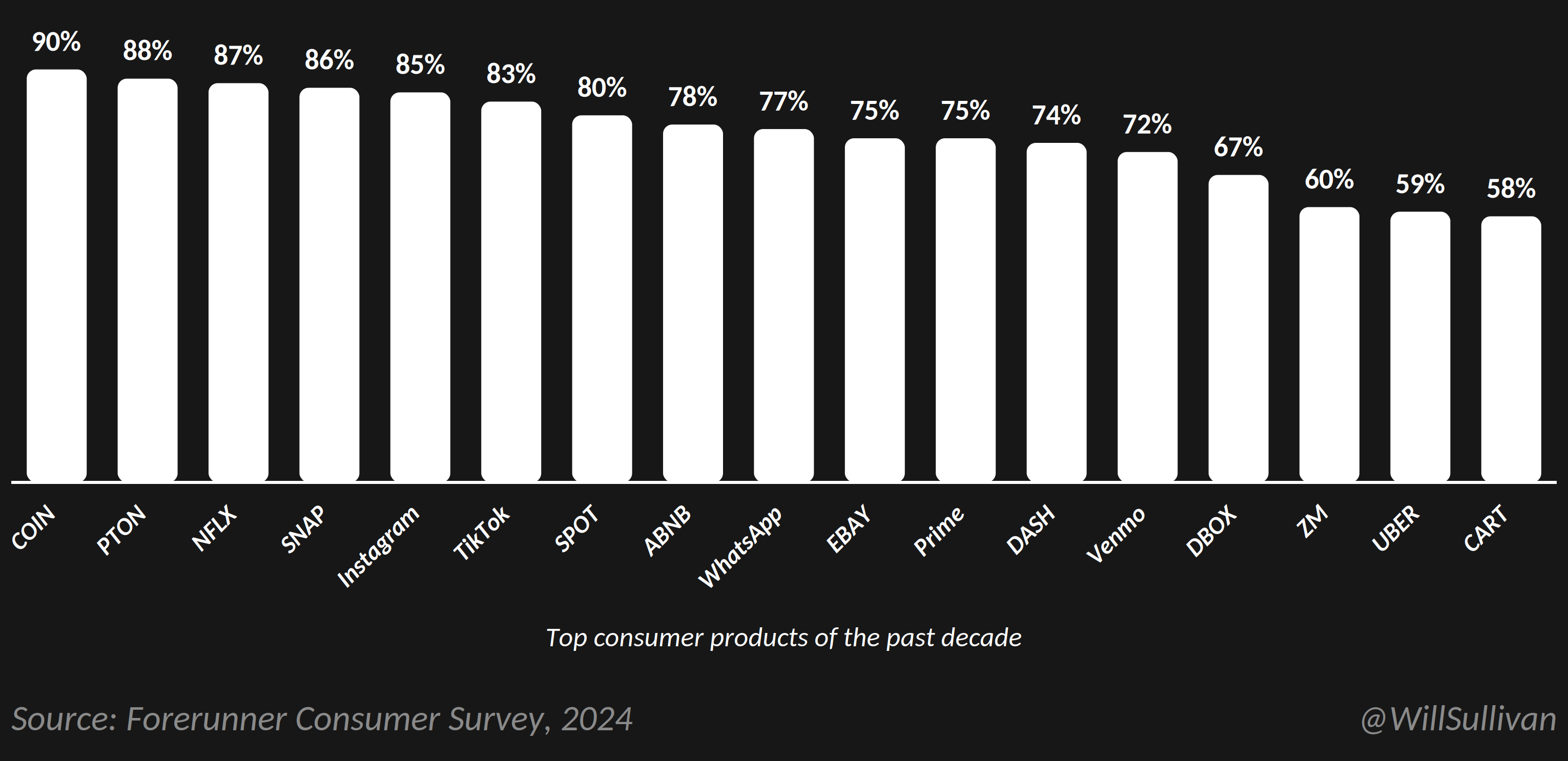
That generation of products sold access, meaning more options and more ability to do it yourself. Access felt like delight because it was new.
Access has a limit, and we passed it. Handing someone infinite options hands them a decision, and handing them the ability to do it themselves hands them a task. Do that across every category of life for fifteen years and you get what Forerunner calls the shift from access to edit, where people want the right option handled for them rather than a longer list to pick from.
Demand moved from delight to relief. The scarce good is the removal of decisions.
AI product work feels off when it leads with spectacle. A demo that makes people say "I did not know it could do that" is a delight event. The durable AI use cases are relief: the tax filing, the document you were dreading. When people imagine using AI for work they dislike, they report the exhale you do at the end of a long day.
Relief has a ceiling, and the ceiling is how much a person will hand over. A product that helps you do something differs from a product that does it on your behalf. Forerunner frames this as do it with me versus do it for me, and that axis gates how much relief you can deliver. Full relief needs a complete handoff, and a handoff requires trust you have not earned on day one.
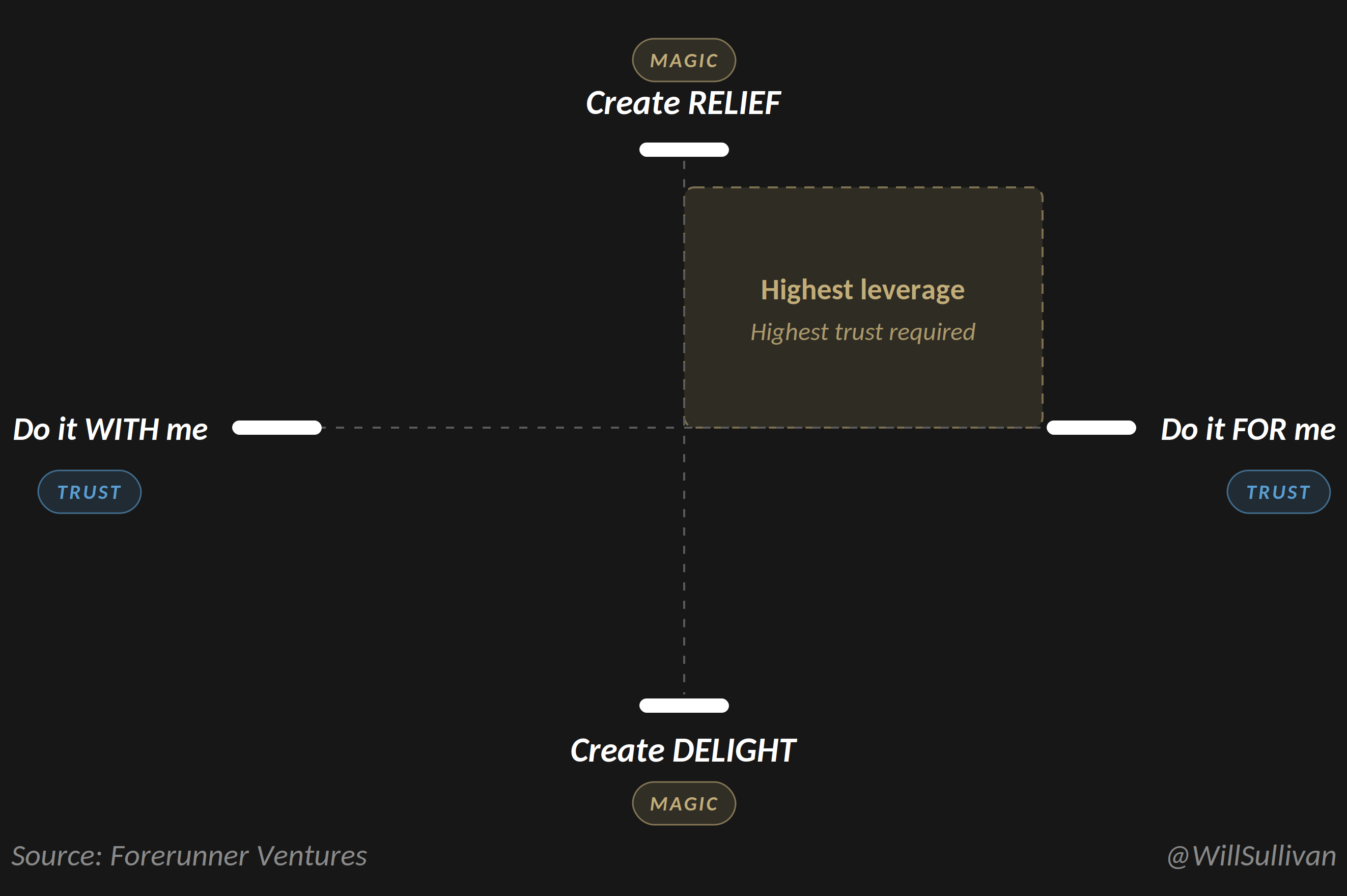
You get a sequence rather than a choice. Start where the user stays in the loop, because that is where they are willing to start. Build the evidence that lets them let go, meaning consistent outputs and easy reversal. Then take over the decisions one at a time.
The mistake is skipping to the end. A product that asks for full delegation before it has earned it reads as a risk.
If you are building for delight, front-load the reveal, show the user something that was not possible before, and let them participate in producing the result so they believe it. Then find a second reason for them to come back, because the surprise will not be there next time.
If you are building for relief, pick a sore spot people already resent. Deliver a better outcome than whatever they are doing now, every time, and be boring about it. Then take more of the job off their plate as trust builds up.
If you want staying power and word of mouth, lead with relief and put delight on top of it. Relief gets you paid, because it attaches to a problem the user already agreed was worth solving. Delight gets you talked about. Products that only delight get admired and abandoned, and products that only relieve get used and forgotten. The rare ones do both, in that order.