In a presentation given last September on the state of the unicorn economy, Thomas Laffont, co-founder of Coatue Management, mentioned in passing a trend no one else seemed to be talking about: when looking historically at the top 50 U.S. public companies weighted by market cap, the largest companies today are no longer the oldest.
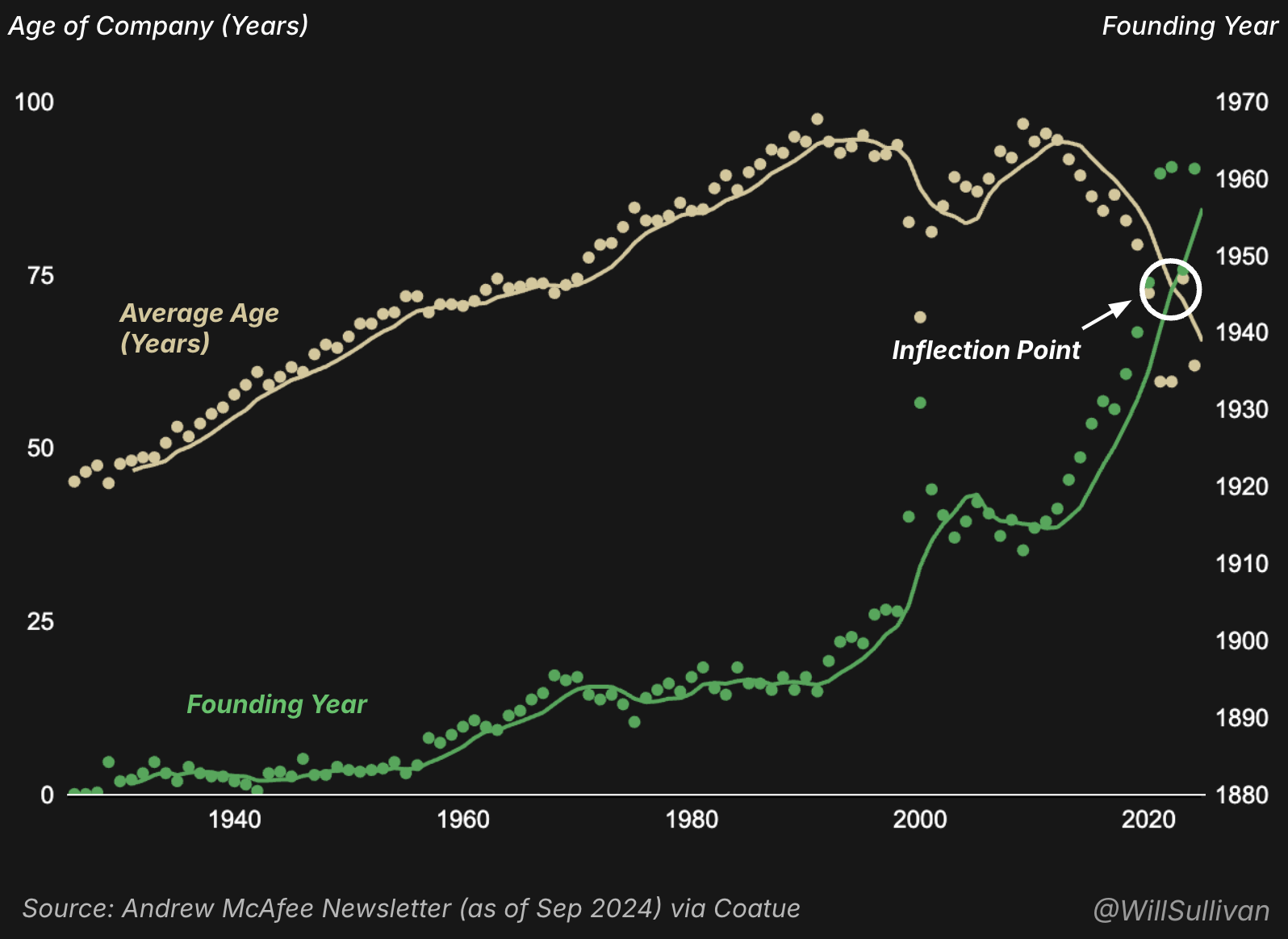
From 1926 through the late 1980s, the dominant companies were also the most established, with their average age steadily increasing. This meant that a company's longevity was a reliable indicator of its market leadership.
However, beginning in the mid-1990s, this trend reversed. The average age of the largest companies began to decline, a shift driven by a more rapid pace of technological advancement. Companies like BlackBerry and Nokia, as Lafont points out, are clear examples of how quickly market leaders can tumble when they don't keep up with the times.
Over the past 25 years, this trend has continued, favoring younger and more agile companies. The average founding year of today's leading companies has moved significantly closer to the present, underscoring the abundance of opportunities still available to emerging firms in our technology-driven economy (especially now in the era of AI).
This single chart serves as a powerful reminder of why the outlook for technology remains exceptionally strong, highlights how innovation continues to be the most disruptive force in business, and emphasizes the need for industry leaders to evolve - or pay the price.
A version of this article was also published to my weekly email newsletter, The Burn Rate, on March 10, 2025. You can view that version of the article here.